
"God of Poetry" — خدائے سخن
Mir Taqi Mir is widely regarded as the greatest poet in the Urdu language — a title embodied by his honorific Khuda-e-Sukhan, God of Poetry. Born in Agra in 1723, he spent his formative years in Delhi before eventually settling in Lucknow under the patronage of the Nawabs of Awadh, where he lived his final decades and profoundly shaped the city's literary identity.
His ghazals are marked by a raw, aching sincerity — a quality Ghalib himself admired deeply. Where later Urdu poetry moved toward complexity and wit, Mir chose directness and pain. He wrote about love, loss, the madness of the mystic, and the indifference of fate with a simplicity that remains devastating centuries later.
Mir wrote in a language rooted in the streets of Delhi — a vernacular Urdu that was closer to the spoken word than the Persianised diction of the court. This accessibility made his poetry live in the mouths of common people even as scholars studied his craft.
جانے نہ جانے گل ہی نہ جانے باغ تو سارا جانے ہے
जाने न जाने गुल ही न जाने बाग़ तो सारा जाने है
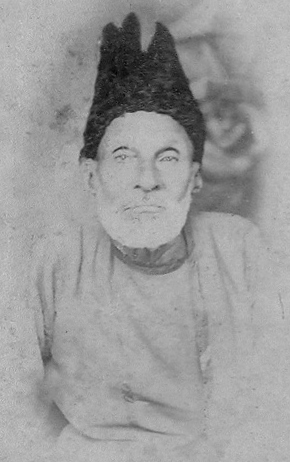
"My style is unique" — انداز بیاں اور
Mirza Asadullah Khan Ghalib is, by almost any measure, the most quoted poet in the Urdu language — and arguably in any language of South Asia. Born in Agra, he spent most of his life in Delhi under Mughal patronage, witnessing the empire's final collapse in 1857 and living to document its aftermath with unflinching honesty.
Ghalib's poetry operates on multiple registers simultaneously — the lover's lament that is also a philosophical inquiry, the complaint against God that is also a declaration of faith, the despair that contains within it an inextinguishable wit. His Urdu ghazals distilled the Persian tradition into something wholly new and have never been surpassed in intellectual range or emotional precision.
His letters, written in colloquial Urdu, are themselves considered literary masterpieces — a running commentary on daily life in Mughal Delhi that remains one of the most vivid accounts of a civilisation in the process of ending.
کہتے ہیں کہ غالب کا ہے انداز بیاں اور
कहते हैं कि ग़ालिब का है अंदाज़-ए-बयाँ और

Lucknow's Poet and Language Master
Ameer Minai was among the most celebrated poets of Lucknow's golden literary age and one of the great custodians of the Urdu language itself. He studied under the legendary Nasikh and became a master of both the ghazal and the marsiya — the elegiac form for which Lucknow became particularly renowned.
His enduring contribution beyond poetry is the monumental Ameer-ul-Lughaat, a comprehensive Urdu dictionary that remains a foundational reference in Urdu lexicography. This dual legacy — of poetic beauty and scholarly precision — places him in a category apart from his contemporaries.
His ghazals capture the characteristically Lucknowi refinement: an exquisite delicacy of feeling, an attention to the musical quality of the line, and a mastery of the classical conventions of radif and qafia that defined the school.
نکلتا آئے ہے داغِ التہاب آہستہ آہستہ
निकलता आए है दाग़-ए-इल्तहाब आहिस्ता आहिस्ता

Champion of Lyrical Simplicity
Nawab Mirza Khan Dagh Dehlvi was the preeminent Urdu poet of the late nineteenth century and the teacher who shaped the generation that followed, most famously Allama Iqbal. His verse is celebrated for its lyrical directness and emotional warmth — qualities he deliberately cultivated against the more ornate styles of his era.
Born in the Red Fort, Dagh experienced the catastrophe of 1857 first-hand before eventually finding patronage in Hyderabad. His poetry carries both the aristocratic elegance of Delhi's Mughal tradition and the vernacular vitality that made Urdu literature a living force rather than a court ornament.
His famous sher on Urdu — "Urdu hai jis ka naam" — became an anthem for the language and is recited at Mushairas to this day as a declaration of Urdu's reach and dignity.
سارے جہاں میں دھوم ہماری زباں کی ہے
सारे जहाँ में धूम हमारी ज़बाँ की है

Lucknow's Romantic Revolutionary
Syed Fazl-ul-Hasan Hasrat Mohani occupies a singular place in Urdu literature and Indian history alike. A poet of exquisite romantic ghazals and a fierce patriot who coined the slogan Inquilab Zindabad — Long Live the Revolution — Hasrat embodied the possibility of a deeply traditional literary sensibility fused with radical political conviction.
His ghazals, set often in the classical tradition of devotional love — the beloved as divine, the lover as seeker — carry a personal urgency and emotional directness that made them beloved across communities. The ghazal beginning "Chupke chupke raat din" became one of the most performed compositions in the classical Urdu canon.
Born near Unnao, he was intimately connected to Lucknow's literary and political life, a presence in its Mushairas and its freedom movement with equal conviction.
ہم کو اب تک عاشقی کا وہ زمانہ یاد ہے
हम को अब तक आशिक़ी का वो ज़माना याद है